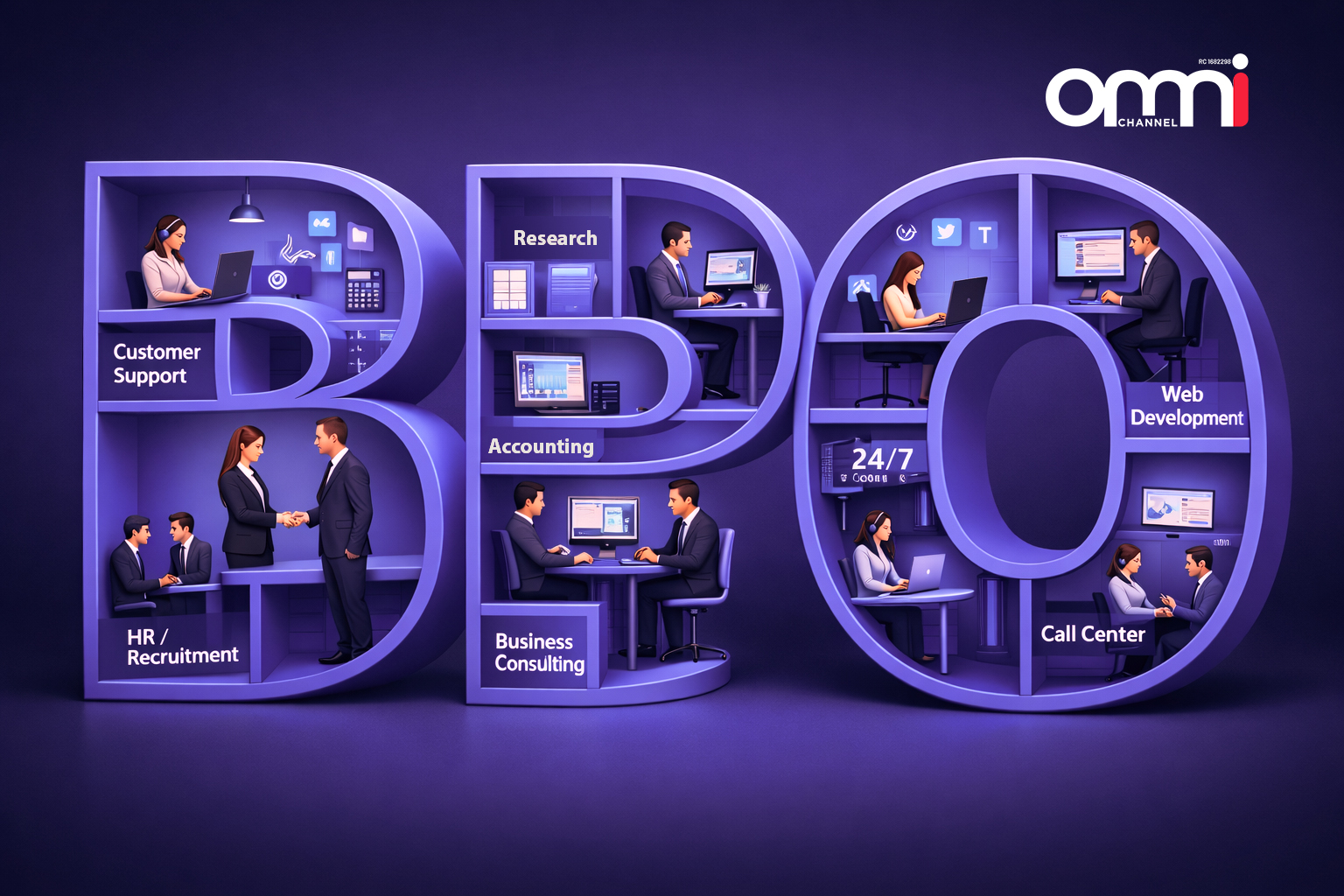
Business Process Outsourcing (BPO) is a business strategy that helps organizations delegate specific operational functions to specialized third-party providers. Running a business today is more demanding than ever.
Customers expect faster responses, operations are increasingly complex, and companies face constant pressure to grow while keeping costs under control. For startups, SMEs, fintechs, e-commerce brands, logistics providers, and growing enterprises, managing every department internally can quickly become overwhelming and expensive.
That’s why more businesses are turning to Business Process Outsourcing (BPO)—a smarter way to scale operations and improve efficiency. Instead of building every function in-house, companies now partner with specialized providers to handle customer support, recruitment, sales, technical support, and back-office operations.
Global surveys like Deloitte’s confirm outsourcing helps reduce operational pressure, improve efficiency, and access specialized talent. Nigerian leaders echo this vision: Dr. Jumoke Oduwole emphasized that NATEP will “position Nigeria as a global leader in the future of work and services,” while Vice President Kashim Shettima described outsourcing as “a strategy to connect global companies with the abundant talents and capabilities inherent in Nigeria.”
Yet many business owners still misunderstand what BPO truly means. In this guide, you’ll learn what BPO is, how it works, the major types of outsourcing services, the benefits and risks involved, and how Nigerian businesses can use outsourcing strategically to scale more efficiently.
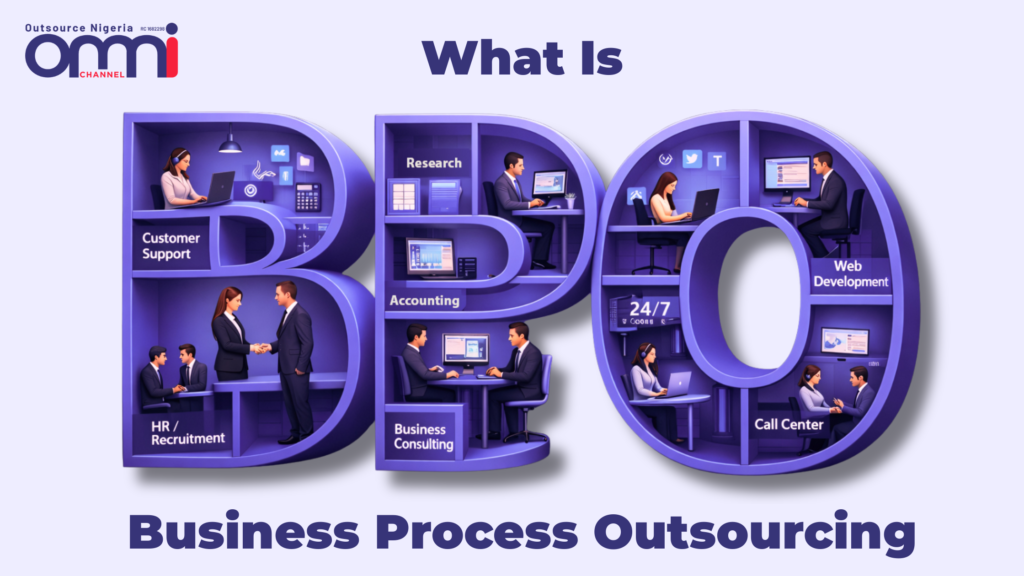
What Is Business Process Outsourcing (BPO)?
Business Process Outsourcing (BPO) is a business strategy where a company delegates non-core or operational functions to a third-party service provider. These providers have the tools, workforce, and systems required to handle these tasks efficiently and at scale.
In simple terms, BPO is the practice of partnering with an external company to manage specific business functions or operational processes instead of handling them entirely in-house. According to Gartner, BPO is “the delegation of one or more IT-intensive business activities to an external service provider, which in turn administers, manages, and optimizes the selected processes based on defined, measurable performance metrics.”
Rather than hiring, training, supervising, and maintaining full internal teams for every operational task, businesses work with specialized providers that already have established systems and trained teams.
BPO is not about losing control of your business operations. Instead, it is about structuring your business so experts handle execution while you maintain full control over growth, strategy, and revenue generation. As Victor Banjo of Lagos Business School explains, “outsourcing should enable strategic capability building, not just short-term fixes, and can be a strategic tool for efficiency, flexibility and competitiveness.”
This is why BPO is often described as a business scalability system rather than just a staffing solution.
In Nigeria, BPO companies typically handle services such as customer support, call center operations, sales development, virtual assistance, recruitment outsourcing, and back-office operations.
Why BPO Has Become a Global Business Strategy
Business Process Outsourcing (BPO) has shifted from a simple cost-saving tactic to a core global growth strategy. It is no longer viewed as just a way to reduce costs. Today, companies around the world use outsourcing to improve efficiency, access specialized talent, scale operations faster, and stay competitive in rapidly changing markets.
According to Deloitte’s Global Outsourcing Survey, 57% of organizations still outsource to reduce costs, 67% now focus on outcome-based models that drive agility, innovation, and talent access. Similarly, the International Association of Outsourcing Professionals (IAOP) recognizes outsourcing as a key business strategy for organizations seeking operational excellence, flexibility, and long-term growth.
Several factors are driving this shift. Rising customer expectations mean businesses must deliver faster responses, personalized experiences, and support across multiple channels, often around the clock. At the same time, companies are navigating talent shortages, digital transformation initiatives, and increasing pressure to operate more efficiently without sacrificing quality.
As a result, BPO has become a practical solution for managing critical business functions while allowing leadership teams to focus on core priorities. Rather than investing heavily in building and maintaining every operational function internally, businesses can leverage specialized providers with established systems, trained professionals, and scalable processes.
The widespread adoption of outsourcing by global brands such as Amazon, Microsoft, Uber, and Airbnb further demonstrates how BPO has become an essential part of modern business operations. For many organizations, outsourcing is no longer just about cutting costs—it’s about building resilience, improving customer experience, and creating the flexibility needed for sustainable growth.
Understanding the Core Concept of Outsourcing in Business
To fully understand BPO, it is important to first understand the concept of outsourcing itself.
Outsourcing means transferring responsibility for a business function to an external provider who specializes in that function. These providers are expected to deliver the service according to agreed standards, performance metrics, and service level agreements (SLAs).
The idea behind outsourcing is simple but powerful: no company is equally good at everything. A retail business may be excellent at selling products but struggle with customer support. A tech company may build great software but struggle with managing customer inquiries. Outsourcing allows each function to be handled by specialists.
This is especially important in a market like Nigeria where businesses often face challenges such as limited staffing resources, high operational costs, inconsistent customer service systems, and difficulty scaling internal teams quickly.
How Business Process Outsourcing Works
Business Process Outsourcing follows a structured process that ensures smooth collaboration between the client company and the outsourcing provider.
First, the business identifies the specific tasks it wants to outsource. These are usually repetitive, time-consuming, or resource-heavy tasks that do not directly generate revenue but are still critical to business operations.
Next, the business partners with a BPO company that specializes in those services. The outsourcing provider then builds or assigns a trained team based on the company’s requirements, systems, and brand guidelines.
After onboarding, the outsourced team begins handling the assigned tasks while the client monitors performance through reporting systems, dashboards, and KPIs. In most modern setups, especially with outsourcing providers like Omnichannel Limited, communication channels such as calls, email, social media, and CRM systems are centralized into one system for better visibility.
Finally, the business continuously evaluates performance, optimizes workflows, and scales operations as needed without having to rebuild internal structures.
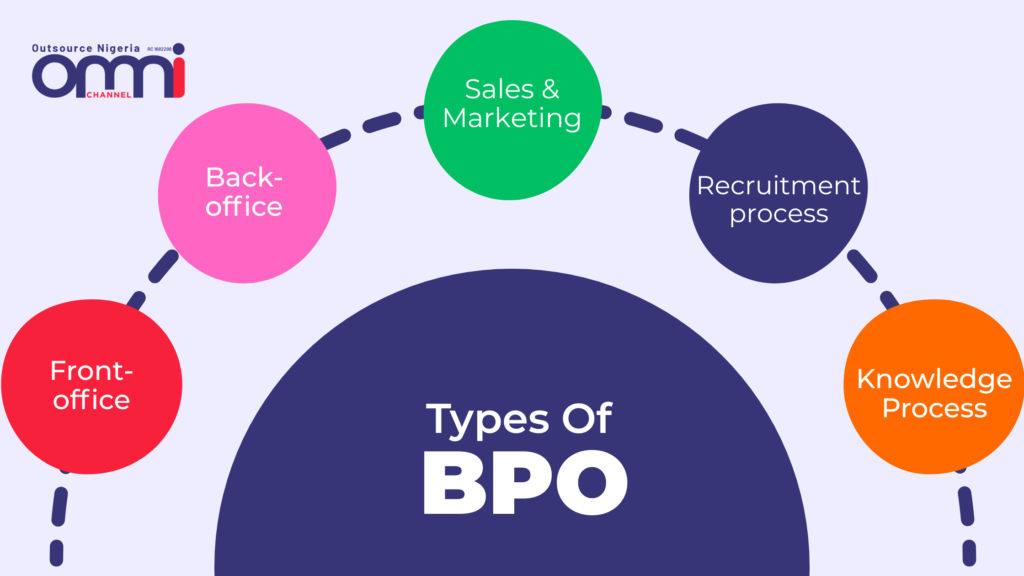
Types of Business Process Outsourcing (BPO)
BPO services are generally divided into different categories based on the type of work being outsourced.
1. Front-Office Outsourcing
Front-office outsourcing involves customer-facing operations. These are functions that directly interact with customers and influence customer experience and brand perception.
This includes customer service, call center operations, live chat support, social media response handling, technical support, and sales support.
In Nigeria, this is one of the fastest-growing segments because businesses are becoming more customer-centric and digital-first.
2. Back-Office Outsourcing
Back-office outsourcing refers to internal business operations that do not directly involve customers but are essential for running the business.
These include administrative support, logistics support, data entry, payroll processing, HR management, inventory management, and financial record keeping.
Many SMEs in Nigeria outsource these tasks to reduce workload and operational stress on internal teams.
3. Sales and Marketing Outsourcing
This involves delegating sales development and marketing operations to an external team. These teams may handle lead generation, cold calling, customer acquisition, email marketing, and sales pipeline management.
For many Nigerian businesses, especially startups, outsourcing sales operations helps them scale revenue generation without hiring a full internal sales department.
4. Recruitment Process Outsourcing (RPO)
Recruitment outsourcing involves delegating hiring and talent acquisition to a specialized agency. Instead of manually sourcing and screening candidates, businesses rely on outsourcing companies to handle recruitment efficiently.
This is particularly useful in industries where hiring is frequent or large-scale.
5. Knowledge Process Outsourcing (KPO)
Knowledge Process Outsourcing involves highly specialized and knowledge-intensive work. These services require professional expertise or technical knowledge.
KPO involves more advanced and specialized services such as data analysis, legal support, financial research, technical documentation, and AI data processing.
Although still developing in Nigeria, KPO is becoming increasingly important as more global companies look for skilled remote talent in Africa.
Types of Outsourcing Models
Businesses can outsource operations in different ways depending on where their outsourcing partner is located. These models help companies balance factors such as cost, time zone compatibility, language, and operational efficiency.
1. Offshore Outsourcing
Offshore outsourcing involves partnering with a service provider in a different country, often to access specialized talent and reduce operating costs.
This is one of the most common outsourcing models used by global organizations. For example, a company in the United States may outsource customer support or back-office operations to a provider in Nigeria.
2. Nearshore Outsourcing
Nearshore outsourcing means working with a provider in a neighboring or nearby country.
Businesses often choose this model because it offers similar cultural and time-zone alignment while still providing cost advantages. For example, a company in the United Kingdom may outsource certain IT or customer support functions to a provider in Eastern Europe.
3. Onshore Outsourcing
Onshore outsourcing, sometimes called domestic outsourcing, involves partnering with a service provider within the same country.
While it may not offer the same cost savings as offshore outsourcing, it can provide easier collaboration, regulatory alignment, and closer oversight. For example, a company in the United States may outsource payroll processing to another U.S.-based provider.
For many global businesses, offshore outsourcing has become increasingly attractive because it combines cost efficiency with access to skilled talent. Countries such as Nigeria are gaining attention as outsourcing destinations due to their large English-speaking workforce, growing digital infrastructure, and ability to support international businesses across multiple industries.
Benefits of BPO
Businesses adopt BPO not simply to reduce costs, but to address growing operational demands and improve organizational efficiency.
Businesses outsource operations for several strategic reasons including:
1. Cost Reduction
One of the biggest reasons companies use BPO is to reduce operational costs.
Building internal departments requires salaries, office space, equipment, software, utilities, recruitment, training, and management overhead. Outsourcing allows businesses to convert many fixed operational costs into more manageable service-based costs.
2. Improved Efficiency
BPO providers specialize in managing specific operational functions. Because they focus on these services daily, they often use better systems, have trained teams, operate with optimized workflows, and achieve higher efficiency levels.
According to Kashifu Inuwa Abdullahi, Director General of NITDA, Nigeria’s outsourcing sector is already valued at $285.8M and employs over 16,540 people — clear evidence of how impactful BPO has become.
3. Access to Skilled Talent
Recruiting and training qualified professionals internally can be expensive and time-consuming.
BPO companies already maintain trained talent pools for customer service, sales, technical support, administration, and operations management.
4. Business Scalability
As businesses grow, operational demands increase.
Outsourcing makes it easier to scale teams quickly without major hiring delays, infrastructure expansion, or large upfront operational investments.
5. Better Customer Experience
Many businesses outsource customer support to improve response times, service quality, customer retention, and customer satisfaction.
In today’s competitive environment, customer experience significantly influences business growth.
6. Focus on Core Business Activities
Outsourcing allows leadership teams to focus on growth, innovation, product development, sales, and strategic expansion.
Instead of spending time managing operational complexities, businesses can focus on higher-value activities.
Common Challenges of BPO
While Business Process Outsourcing offers significant benefits, businesses should be aware of some potential challenges:
Communication Gaps
Differences in processes, expectations, or communication styles can sometimes affect collaboration.
Data Security Concerns
Sharing sensitive business or customer information requires strong security measures and compliance standards.
Choosing the Wrong Provider
An inexperienced or poorly managed outsourcing partner can negatively impact service quality and performance.
Lack of Clear KPIs
Without defined performance metrics, it can be difficult to measure success and hold providers accountable.
Fortunately, these challenges can be reduced through proper planning and management. Businesses should carefully evaluate outsourcing providers, establish clear Service Level Agreements (SLAs), define measurable Key Performance Indicators (KPIs), and conduct regular performance reviews.
With the right partner and governance structure, BPO can deliver reliable, secure, and scalable business support.
The Future of BPO
The future of Business Process Outsourcing is being shaped by AI, automation, data analytics, and rising customer expectations. Outsourcing providers are no longer just supplying staff — they are delivering integrated solutions that combine technology, talent, and operational expertise.
Industry groups like IAOP highlight innovation, digital transformation, and resilience as the key priorities driving this shift. At the same time, trends such as omnichannel customer engagement, remote work, and AI-assisted service delivery are changing how businesses interact with customers and manage operations.
As customer experience becomes a major competitive advantage, companies will increasingly rely on outsourcing partners that can deliver both efficiency and technology-enabled service excellence.
With its growing digital infrastructure, large English-speaking workforce, and expanding tech ecosystem, Nigeria is well positioned to benefit from these global trends.
How Outsource Nigeria Supports Modern Businesses
Successful outsourcing isn’t simply about hiring external staff. Businesses need a partner that can provide the right talent, technology, processes, and operational oversight to support long-term growth.
Outsource Nigeria supports businesses through:
- Customer Service & Call Center Operations
- Lead Generation & Sales Support
- Recruitment Process Outsourcing (RPO)
- HR Management & Workforce Support
- Finance & Accounting Assistance
- Technical Support Services
- Research & Data Processing
By combining skilled professionals with proven operational frameworks and omnichannel capabilities, Outsource Nigeria helps organizations:
- Improve efficiency
- Enhance customer experience
- Scale operations more effectively
From customer support and call center operations to recruitment, finance, and technical support, Outsource Nigeria provides scalable BPO solutions designed to improve efficiency, reduce costs, and drive sustainable growth.
As global demand for outsourced services continues to grow, countries like Nigeria are emerging as attractive destinations due to their skilled workforce, competitive costs, and expanding digital economy. For businesses looking to streamline operations and focus on growth, outsourcing is no longer just an option—it is increasingly becoming a strategic advantage.