The global Business Process Outsourcing (BPO) industry is evolving. For decades, organizations looking to outsource customer support, back-office operations, technical support, and administrative functions primarily turned to established outsourcing destinations such as India and the Philippines.
These countries built strong reputations by combining large talent pools with cost-effective service delivery. Today, however, global outsourcing strategies are changing.
Businesses are now looking beyond traditional outsourcing hubs as they prioritize:
- Operational resilience
- Access to diverse talent markets
- Digital capability
- Long-term scalability
- Business continuity across regions
Rising labor costs, talent shortages in some regions, and the need for business continuity have encouraged companies to explore emerging destinations that can support long-term growth.
Nigeria is rapidly becoming part of that conversation.
With a large English-speaking workforce, a youthful population, a growing digital economy, and increasing government support for talent development, Nigeria is positioning itself as one of Africa’s most promising outsourcing destinations.
More importantly, the country’s growing relevance is not simply about competitive pricing. It is about talent, capability, scalability, and the ability to support modern business operations in an increasingly digital world.
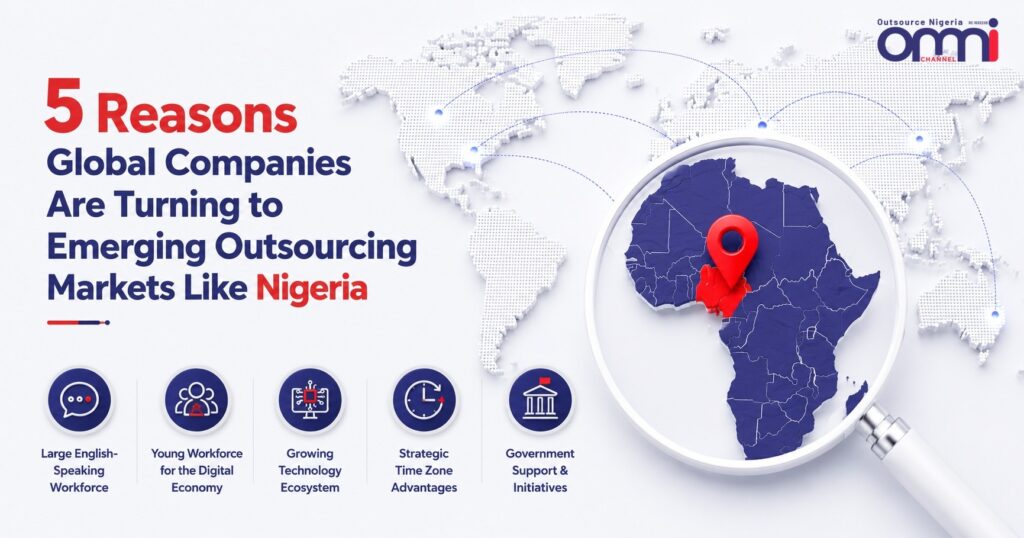
5 Reasons Global Companies Are Turning to Emerging Outsourcing Markets Like Nigeria
The outsourcing industry today looks very different from what it did ten years ago.
Organizations are no longer evaluating outsourcing destinations solely on labor costs. Factors such as talent availability, digital infrastructure, business environment, operational resilience, and long-term scalability have become equally important.
This shift is reflected in research from Kearney, whose Global Services Location Index has long been one of the most respected benchmarks in the outsourcing industry. Kearney’s research highlights how businesses increasingly evaluate locations based on a combination of financial attractiveness, workforce skills, and business environment rather than cost alone.
As a result, companies are exploring new markets that can provide both skilled professionals and sustainable growth opportunities. Nigeria is emerging as one of those markets.
- A Large English-Speaking Workforce
One of Nigeria’s most significant advantages is its workforce.
As Africa’s most populous country, Nigeria provides access to a large and expanding pool of professionals across customer service, administration, sales, technology, operations, finance, and business support functions.
English serves as Nigeria’s official language and remains the primary language of education, business, and professional communication. This makes Nigeria particularly attractive for organizations serving English-speaking customers and markets.
For businesses outsourcing customer support, virtual assistance, sales operations, administrative services, or back-office functions, communication quality is often just as important as technical competence.
The ability to access a large workforce that can communicate effectively with customers, clients, and stakeholders creates a meaningful competitive advantage.
- A Young Workforce Built for the Digital Economy
Nigeria’s demographic profile is another factor attracting attention from global businesses.
According to the World Bank, Sub-Saharan Africa is expected to account for a growing share of the world’s workforce in the coming decades. Nigeria, with one of the youngest populations globally, is positioned to play a major role in that transformation.
This matters because modern BPO operations increasingly rely on digital tools, cloud platforms, CRM systems, collaboration software, AI-enabled workflows, and remote work technologies.
Organizations are looking for professionals who can quickly adapt to changing technologies and evolving business processes.
Nigeria’s young workforce provides a strong foundation for companies seeking talent capable of operating in a modern digital environment.
- A Growing Technology Ecosystem
Nigeria’s technology sector has expanded significantly over the past decade.
The country has become home to one of Africa’s most active startup ecosystems, attracting investment, producing skilled professionals, and driving innovation across multiple industries.
The growth of this ecosystem has not gone unnoticed by global technology leaders.
Companies such as Google, Microsoft, Meta, and IBM have all invested in programs, infrastructure, and initiatives designed to support digital skills development and technology adoption across Africa.
While these organizations are not BPO providers, their investments help strengthen the broader ecosystem that supports technology-enabled business services.
For outsourcing buyers, this creates confidence that the market is developing the capabilities required for modern service delivery.
- Strategic Time Zone Advantages
Time zone alignment is often overlooked when evaluating outsourcing destinations.
However, for many organizations, it plays a critical role in productivity, responsiveness, and customer experience.
Nigeria’s location provides substantial overlap with working hours across the United Kingdom, Europe, and the Middle East, while also offering workable overlap with North American teams.
This overlap allows outsourced teams to collaborate more effectively, participate in real-time meetings, and support customers during key business hours.
For customer support operations, sales teams, virtual assistants, and back-office functions, this can significantly improve service delivery and operational efficiency.
- Government Support Is Strengthening the Opportunity
The development of a successful outsourcing industry requires more than talent alone.
It also requires policies and initiatives that support workforce development, digital adoption, and participation in the global services economy.
Nigeria has begun taking meaningful steps in this direction.
Programs such as the National Talent Export Programme (NATEP) are designed to increase Nigeria’s participation in global professional services and remote work markets by connecting skilled professionals with international opportunities.
While government initiatives alone do not create an outsourcing industry, they signal growing recognition of the economic value that professional services and outsourced business operations can generate.
For international buyers, this represents another indicator that Nigeria is actively investing in its future as a global talent destination.
Why Nigeria’s Opportunity Extends Beyond Cost Savings
One of the most common misconceptions about outsourcing is that businesses outsource only to reduce costs.
Cost efficiency remains important, but modern outsourcing decisions are increasingly driven by access to talent, operational flexibility, business continuity across regions, scalability of teams, service quality and expertise
Research examining global digital work platforms has shown that organizations increasingly source talent based on expertise, flexibility, and specialized capabilities rather than labor costs alone.
This shift is particularly important in Business Process Outsourcing.
Unlike project-based outsourcing arrangements, BPO focuses on managing ongoing business functions and operational processes.
If you’re unfamiliar with the concept, read our guide on What Is Business Process Outsourcing (BPO).
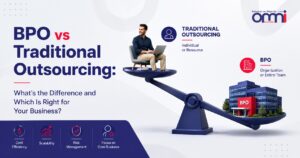
Similarly, if you’re evaluating different outsourcing models, our article on BPO vs Traditional Outsourcing explains the differences between task-based outsourcing and long-term process management partnerships.
As businesses grow, the challenge often becomes less about finding someone to complete a task and more about finding a partner capable of managing and improving an entire function.
This is where Nigeria’s growing talent ecosystem becomes especially relevant.
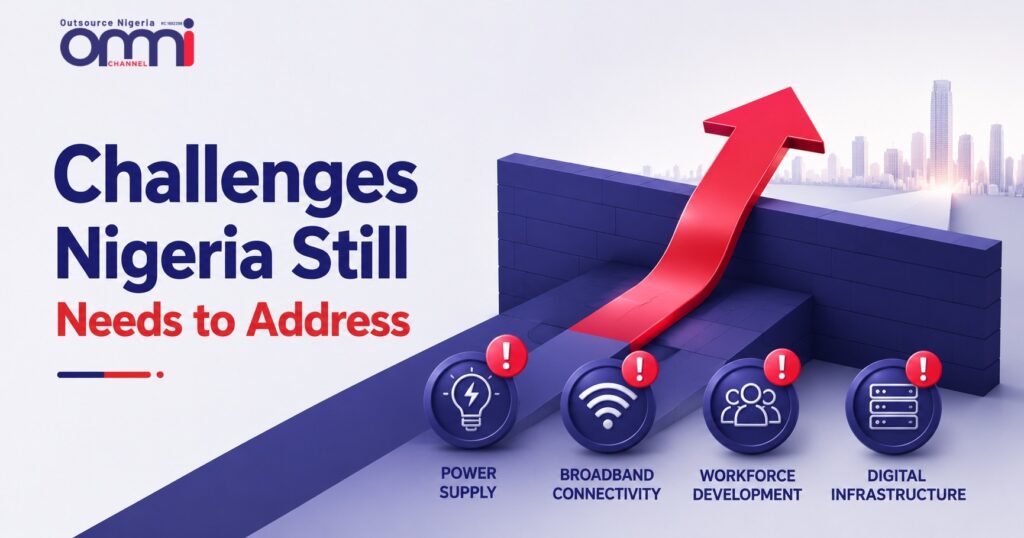
Challenges Nigeria Still Needs to Address
No discussion about Nigeria’s outsourcing potential would be complete without acknowledging the challenges that remain.
Infrastructure development continues to be an important area of focus. Reliable power supply, broadband connectivity, workforce training, and digital infrastructure require ongoing investment.
These challenges are real. However, they are not unique to Nigeria. Many of today’s leading outsourcing destinations faced similar obstacles during earlier stages of their development.
Research from Kearney’s Global Services Location Index consistently shows that successful outsourcing destinations are evaluated across multiple dimensions—including talent availability, business environment, and digital readiness—and that markets often strengthen these capabilities over time through sustained investment and ecosystem development.
What matters most is the direction of progress.
Continued investment from both the public and private sectors, growing technology adoption, expanding digital infrastructure, and increased focus on workforce development suggest positive momentum.
For organizations evaluating long-term outsourcing opportunities, the trajectory is often just as important as current conditions.
The Future of Nigeria’s BPO Industry
The future of outsourcing is increasingly centered on talent, expertise, and operational capability.
Deloitte’s Global Outsourcing research has consistently shown that organizations are moving beyond viewing outsourcing purely as a cost-reduction strategy. Instead, outsourcing is now being used to access specialized talent, improve operational agility, and accelerate business transformation in a rapidly changing global economy
This shift is reinforced by broader workforce research, including insights from LinkedIn’s Global Talent Trends and Microsoft’s Work Trend Index, which highlight a growing global demand for adaptable, digitally skilled professionals. As organizations integrate AI, automation, and cloud-based systems into daily operations, access to capable talent is becoming a core competitive advantage rather than a supporting function.
In practical terms, this means outsourcing decisions are becoming less about geography and more about:
- Capability
- Reliability
- Speed of execution
- Depth of skill
- Ability to adapt to evolving technologies
Organizations are now prioritizing partners who can help them:
- Improve customer experience delivery
- Support business expansion and scalability
- Increase operational efficiency
- Adapt quickly to technological and market changes
- Access skilled, flexible talent pools
Within Nigeria, this shift is being closely reflected in discussions among digital economy researchers, workforce development advocates, and policy contributors who emphasize that long-term competitiveness will depend on the country’s ability to consistently produce job-ready, digitally fluent talent.
These perspectives consistently point to a central idea: Nigeria’s advantage will not be defined by cost efficiency alone, but by how effectively it aligns education systems, digital infrastructure, and skills development with global demand for remote and knowledge-based services.
Nigeria’s combination of demographics, English-language capability, accelerating digital adoption, expanding technology ecosystem, and emerging policy support positions it well to participate in this global shift.
Because the countries that will lead the next generation of outsourcing are not necessarily those with the lowest costs. They are the countries that can consistently provide skilled talent, reliable service delivery, and long-term business value.
Nigeria is increasingly demonstrating the potential to do exactly that.
Looking for Outsourcing Support in Nigeria?
At Outsource Nigeria, we help organizations move beyond exploration into structured outsourcing execution.
If you are currently:
- Struggling with rising operational costs
- Looking to scale customer support or back-office teams
- Exploring alternative outsourcing destinations beyond traditional hubs
- Building a flexible remote operations model
We help you turn that intent into a working operational structure.
We design and implement outsourcing solutions across:
- Customer support operations
- Administrative and back-office functions
- Lead generation and sales support
- Virtual assistant and remote teams
- Custom business process solutions
Our focus is simple:
Helping you build reliable, scalable teams in Nigeria that operate as a seamless extension of your business — not just an external service provider.
If you are evaluating whether Nigeria is the right fit for your operations, the next step is a structured conversation around your goals, team requirements, and delivery model.
👉 Start here: outsource nigeria