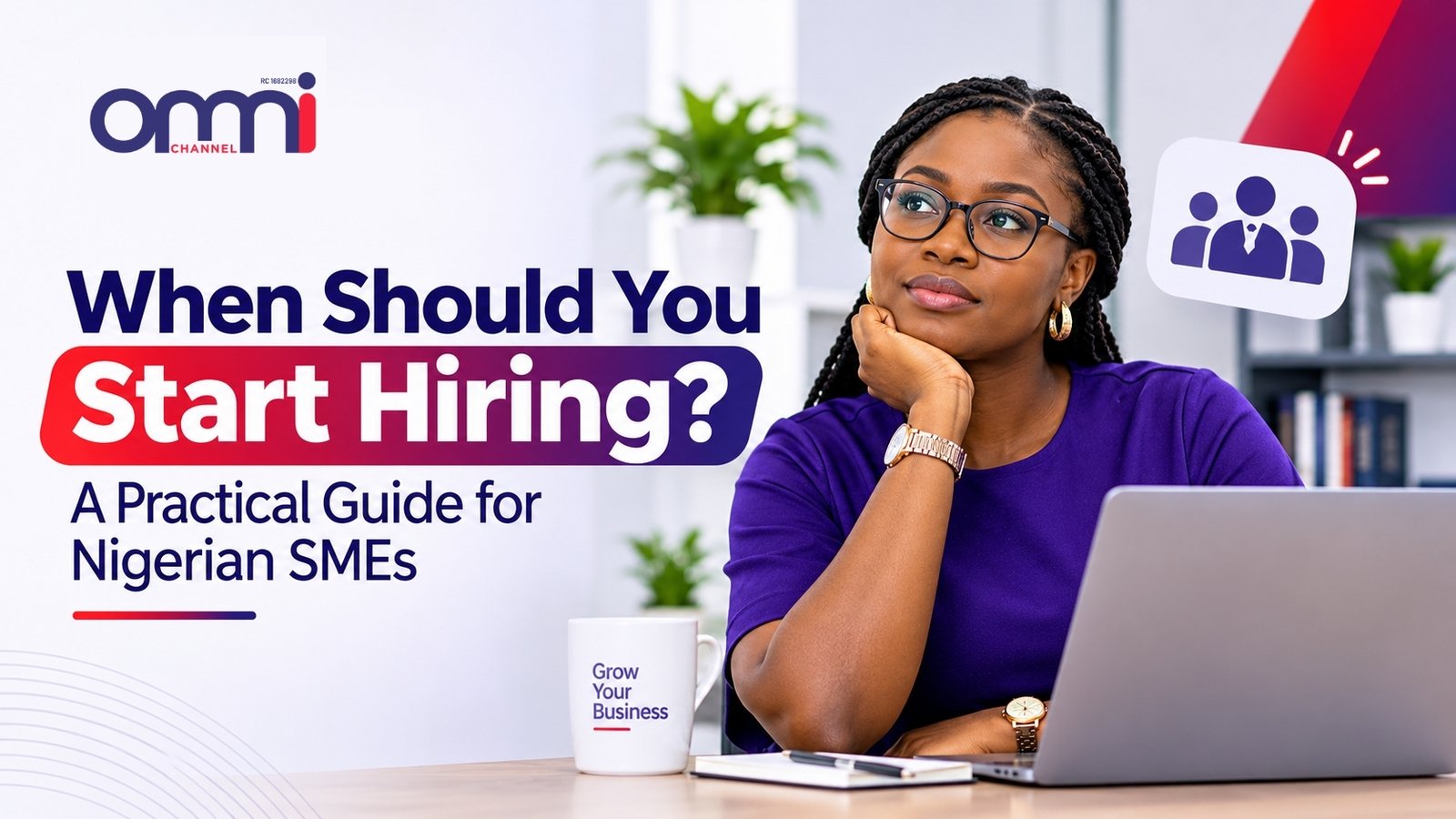
At some point, almost every growing business owner asks: “When should I start hiring?” The obvious answer seems simple. If there is too much work, hire more people. But it is not always that simple.
Sometimes a business is overwhelmed because its processes are inefficient. Sometimes the founder is spending hours on repetitive work that could be automated. Sometimes demand has increased temporarily and does not justify a permanent employee. And sometimes the business genuinely needs another person—but waits so long that customers, revenue and growth begin to suffer.
So, when should a business start hiring? The right time is not simply when you are busy. It is when your current capacity has become a measurable business constraint, the need is likely to continue, and adding the right person is expected to create more value than the total cost of that additional capacity.
That makes hiring more than an HR decision. It is a business, financial and operational decision. The Chartered Institute of Personnel and Development (CIPD) describes strategic workforce planning as ensuring organisations have the right people, with the right skills, in the right roles, at the right time and at the right cost to meet their goals. CIPD — CIPD launches practical guidance on workforce planning
For Nigerian SMEs, the decision can be even more complicated. Businesses have to consider changing operating costs, inflation, naira volatility, infrastructure, access to finance, salary expectations and the availability of skilled talent.
So the question should not simply be: “Can I afford to hire?” It should be: “What business problem will this person solve, and is hiring the best way to solve it?”
First, Ask: Do You Actually Need to Hire?
Before creating a job description, identify the problem. If you are thinking, “I have too much to do,” break that workload down. What is actually consuming your time? Perhaps it is customer follow-ups, scheduling, bookkeeping, order processing, social media management, reporting or administrative work.
The answer matters because not every capacity problem requires an employee. Imagine a business owner spending ten hours every week manually sorting enquiries from WhatsApp, email, Instagram and phone calls. Hiring another person could help—but so could centralising those conversations or automating parts of the process.
Likewise, a founder who spends most of the day preparing reports and responding to routine enquiries may not need another salesperson. They may need operational support that gives them time to sell. This leads to an important principle: Do not hire because you are overwhelmed. Hire because you understand what is causing the overwhelm and know what additional capacity will change.
The 7 Signs Your Business Is Ready to Hire
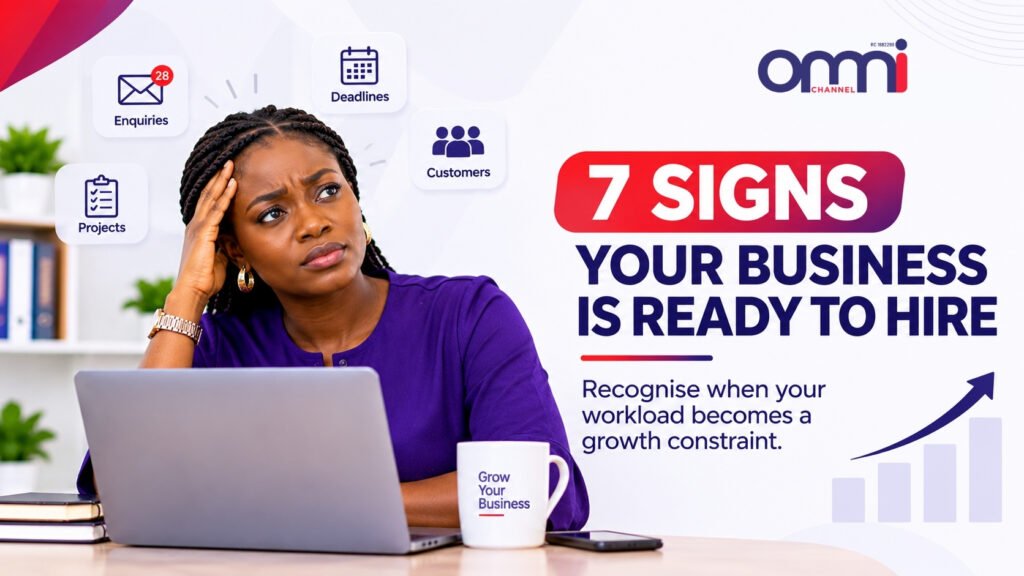
There is no universal revenue figure, employee count or business age that tells every company when to hire. Instead, look for patterns.
1. Your Workload Has Become Consistently Greater Than Your Capacity
One unusually busy week does not necessarily mean you need an employee. But if your business has been operating at or beyond capacity for months, the situation is different.
Projects may be taking longer. Customers may be waiting for responses. Deadlines may keep moving. Your backlog may continue growing. You may even be turning away work that you would otherwise accept.
The key word is consistently. If demand repeatedly exceeds what your current team can deliver, you may have a genuine capacity problem.
Ask yourself:
“If I hired the right person today, would there still be enough meaningful work for them six months from now?”
If the answer is yes, it may be time to consider hiring.
2. Your Founder or Key Employees Have Become the Bottleneck
In an early-stage business, founders often do almost everything: sales, customer service, operations, administration, delivery and problem-solving. That flexibility helps a young business survive. Eventually, however, it can become the reason the business stops scaling.
If important decisions, customer relationships or routine tasks all depend on one person, the organisation’s capacity is limited by that person’s time. Consider a founder who spends most of the day answering routine enquiries and preparing reports while proposals remain unfinished and sales opportunities go cold.
The founder may believe they are saving money by doing everything themselves. But if low-value work prevents them from doing higher-value work, the business is paying an opportunity cost.
The question becomes:
“What could I accomplish with the time this person would give back to me?”
If that time could be used for sales, partnerships, strategy, delivery or business development, the hire may be an investment in capacity rather than simply another payroll expense.
3. Your Customers Are Starting to Feel the Pressure
A busy founder is an internal problem. Poor customer experience is a business problem.
If customers are experiencing slower responses, missed follow-ups, delayed quotations, late deliveries or inconsistent communication, your capacity problem has moved beyond your internal workload. For example, imagine a Lagos-based service business receiving dozens of enquiries each week.
The founder is responsible for sales, fulfilment and customer service. By the time some enquiries receive a response, potential customers have already chosen another provider. The business might assume it needs more leads.
The actual problem may be that it cannot effectively handle the leads it already has. Sometimes, therefore, the first hire does not create more demand. They help the business make better use of the demand it already has.
4. You Are Losing Revenue Because You Cannot Deliver It
This is one of the clearest hiring signals. Suppose a growing Nigerian e-commerce business has the capacity to process 100 orders a month but is consistently receiving demand for 150.
The additional orders are being delayed or rejected because there is nobody available to handle fulfilment, inventory or customer support. The problem is no longer a lack of demand. It is a lack of capacity.
But before hiring, determine whether the demand is sustainable. A temporary spike may justify temporary support. A recurring gap may justify a permanent role.
The financial question is therefore not simply:
“Do we have enough work for another person?”
It is:
“Will the additional capacity create or protect enough value to justify its cost?”
5. You Are Spending Too Much Time on Low-Value Work
Not every task deserves the founder’s attention. If a founder spends 15 hours every week on repetitive administration, that is roughly 60 hours a month that could potentially be redirected elsewhere.
What could happen with those hours? More sales conversations. Better customer relationships. Strategic planning. Partnerships. Product development. Business development.
This is where opportunity cost becomes important. The cost of not hiring may not appear as a line item on the company’s financial statements. It may appear as opportunities that were never pursued, customers who were not followed up, projects that were delayed or strategic work that never happened.
That does not automatically mean you need a full-time employee. It means you need to understand what your time is worth and determine whether another form of capacity would create greater value.
6. The Work Is Recurring and Can Be Handed Over
A permanent employee is easier to justify when the work is permanent too. If you need someone for two weeks, a full-time hire may not make sense.
If the same workload appears every week and is likely to continue for the foreseeable future, the case becomes much stronger. Before hiring, document the work you want to transfer.
You should understand the responsibilities, expected outcomes, tools, processes and reporting structure involved. This exercise can reveal something important: you may not have a hiring problem; you may have an undefined role.
A clearly defined role is easier to recruit for, easier to manage and easier to measure. You are not hiring someone simply to “help.” You are giving someone clear ownership of a business responsibility.
7. Your Business Can Sustain the Total Cost of the Hire
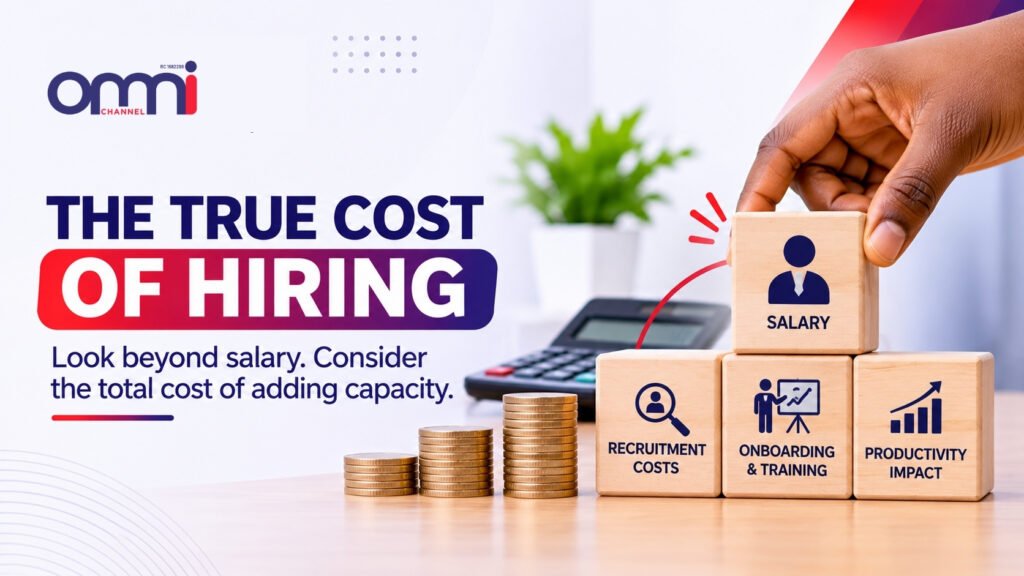
Salary is only one part of the financial commitment involved in adding an employee. Depending on the role and business, the total cost may also include recruitment, onboarding, equipment, software, training and management time.
Employing someone also creates administrative responsibilities around payroll, compensation, leave, taxes and record keeping. The U.S. Small Business Administration outlines these responsibilities as part of hiring and managing employees. U.S. Small Business Administration — Hire and Manage Employees
For Nigerian SMEs, the wider operating environment can also affect whether a new role remains financially sustainable over time.
So the question should not be: “Can we pay this salary this month?” It should be: “Can the business sustainably support the total cost of this role?”
A strong hiring decision should still make sense if revenue temporarily falls below expectations.
How Much Does It Cost Not to Hire?
This is one of the most overlooked parts of the hiring decision. Imagine a founder spending 20 hours each week handling administration, customer support and routine operations.
Now consider what happens because of that: a proposal is submitted late, a customer waits too long for a response, or a sales lead is forgotten. The cost of these missed opportunities may eventually exceed the cost of the person who could have created the necessary capacity.
This does not mean every business should immediately hire. The solution might be a full-time employee, part-time support, a contractor, automation or outsourcing.
The point is to compare the cost of the capacity gap with the cost of solving it.
Fix, Flex, or Hire: Choosing the Right Solution
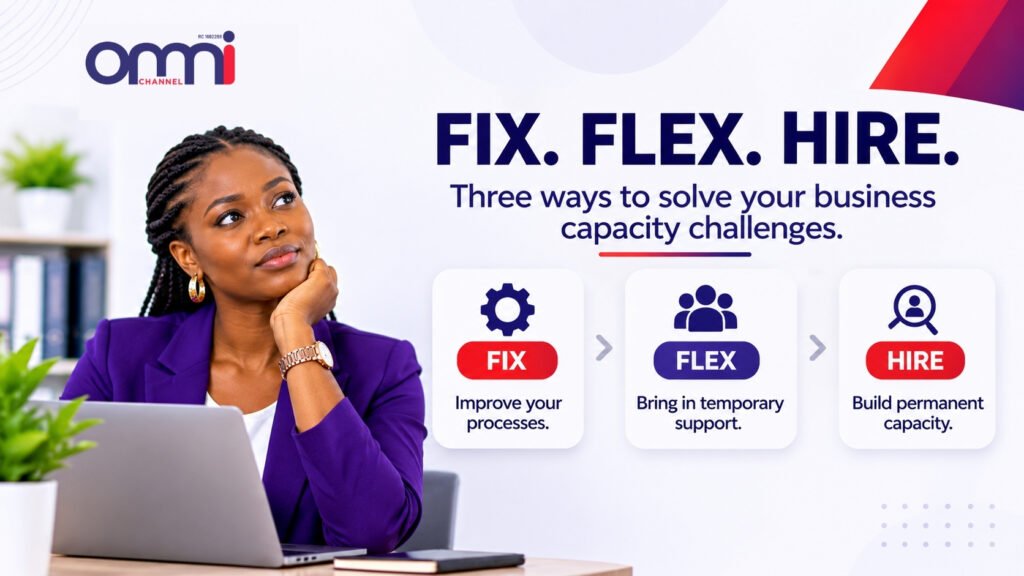
Not every capacity problem requires a permanent employee. Before hiring, use a simple Fix → Flex → Hire approach.
FIX: The Problem Is Your Process
If the workload exists because your business relies on inefficient, repetitive or manual processes, fix the process first. You might need better software, automation, centralised communication, standard operating procedures or fewer unnecessary approval steps.
Adding another person to a broken process can simply make the broken process more expensive.
FLEX: The Need Is Real but Variable
Sometimes the workload is genuine but unpredictable. A business may need additional customer support during a busy season, a specialist for a specific project or administrative support for a few hours each week.
In those situations, contractors, freelancers, part-time workers or outsourced services may provide the capacity you need without immediately creating a permanent payroll commitment. Small businesses may also use contractors when they need specialised expertise or have seasonal or temporary needs. U.S. Small Business Administration Small Business Owners Share Challenges of Hiring Employees and Gig Workers
Flexible capacity can also help you understand whether a role is truly recurring before you turn it into a full-time position.
HIRE: The Need Is Consistent and Strategic
A permanent hire makes more sense when the work is recurring, the role is clearly defined, the business can sustainably fund it and the person will provide ongoing ownership. It makes even more sense when automation or flexible support cannot reasonably solve the problem.
At that point, hiring is no longer about “getting help.” It becomes part of your growth strategy.
The Nigerian Reality: What Should SMEs Consider?
Global hiring advice does not always reflect the realities of running a Nigerian SME. Operating costs can change quickly, power reliability can affect work, and salary expectations can change as candidates respond to the wider economy.
Talent availability is another consideration. The International Labour Organization has identified chronic skills mismatches and challenges in matching labour supply with employer demand as issues affecting Nigeria’s labour market. ILO Assessment of Public Employment Services in Nigeria
This makes workforce planning particularly important. The ILO describes skills-needs anticipation as identifying current and future workforce demands so that skills supply can be better aligned with labour-market needs. ILO Skills Needs Anticipation
That means hiring decisions should not begin only when a vacancy becomes urgent. If you know you will need a specialist in six months, begin planning before the role becomes a crisis.
For difficult-to-fill positions, businesses should consider what skills genuinely need to exist on day one and what can be developed through training. The perfect candidate may not always be available within the budget.
Sometimes the better hire is someone with the right foundation, learning ability and potential to grow into the role. For Nigerian SMEs, workforce planning is therefore not just about how many people you need.
It is about what capabilities the business will need next and how you will build them sustainably.
A 10-Question Hiring Readiness Checklist
Before posting a vacancy, ask yourself:
- What specific business problem will this hire solve?
- Is the problem temporary or recurring?
- What will this person own?
- Is the work documented well enough to hand over?
- What happens if we do not hire for the next six months?
- Will the role improve capacity, revenue, productivity or customer experience?
- Can the business support the total cost?
- Could automation, a contractor, part-time support or outsourcing solve the problem better?
- Do we have the systems and management capacity to support the person?
- What should they accomplish in their first 30, 60 and 90 days?
If you cannot answer these questions, you may need to fix the underlying problem before hiring.
If you can answer the checklist questions clearly, you have a much stronger basis for bringing someone onto the team. Hiring too early can create unnecessary payroll pressure, idle capacity and poorly defined roles.
Hiring Too Early vs Hiring Too Late
Hiring too late can be even more expensive. When a business waits until the situation becomes a crisis, the founder may already be overwhelmed, and revenue opportunities may have been lost.
The best time is somewhere between those extremes.
Hire when the need is clear, the work is sufficiently predictable, the economics make sense and the business is ready to give another person meaningful ownership.
You do not need to wait until everything is perfect. You do need enough evidence to know that you are solving a genuine business constraint.
Final Thoughts: The Best Time to Hire Is When Capacity Becomes a Business Constraint
So, when should a business start hiring? Not when it reaches a magical revenue number or simply because competitors have employees.
The right time to hire is when a recurring capacity constraint is costing the business more than the cost of addressing it—and when hiring is genuinely the best solution.
For one business, that may be the founder spending too much time on administration. For another, it may be customers waiting too long for responses or consistently turning away profitable work.
And for some businesses, the answer will not be a full-time employee at all. It may be automation, a contractor, part-time support, or outsourcing.
The goal is not to build the biggest team. The goal is to build the right capacity, at the right time, for the right reason.
For Nigerian SMEs, that decision requires particular attention to operating costs, talent availability, and the sustainability of the business model. Before you post that vacancy, ask yourself one final question.
“Am I hiring because my business is genuinely ready for another person—or because I have not yet solved the real problem?”
If the answer is clear, you are much closer to making the right hiring decision. When the answer is yes, the next challenge is finding the right person and defining the role clearly.
Omni Channel can help.
Whether you are building your first team or expanding an existing workforce, the right talent can help your business focus on sustainable growth. If you are ready to build the team, connect with Omni Channel to discuss your recruitment needs.
The goal is not to hire more people. It is to build the right capacity at the right time.