What Is a Customer Journey?
A customer can have a perfectly pleasant interaction with a sales representative and still come away frustrated with the business.
They may receive a quick response on WhatsApp but have to repeat the same information when they call. They may complete a purchase easily but struggle to get help afterwards. Or marketing may promise one thing while sales, onboarding and customer service deliver something different.
These are not necessarily individual touchpoint failures. They can be customer journey problems.
A customer journey is the end-to-end experience a person has with a business while trying to achieve a goal, from discovering a solution and evaluating options through purchase, onboarding, usage and ongoing support. McKinsey & Company’s customer experience research describes customer journeys as the complete set of interactions a consumer has with a brand for a particular task or decision.
That distinction matters because customers do not experience a business according to its internal departments.
Marketing may own the first interaction. Sales may handle the next. Customer service may handle a complaint. Finance may handle payment. Operations may handle delivery.
To the customer, these are simply different parts of one journey.
Customer Journey vs. Customer Experience
Customer journey and customer experience are closely related, but they are not the same thing.
The customer journey describes the path a customer takes through a particular goal or relationship with a business. Customer experience (CX) is the broader perception formed through those interactions.
| Dimension | Customer Journey | Customer Experience (CX) |
| Focus | The customer’s path and interactions | The customer’s overall perception |
| Scope | A specific journey or lifecycle | The broader relationship with the business |
| Looks at | Stages, actions, touchpoints and pain points | Expectations, satisfaction, emotions and perceptions |
| Key question | Where does the journey work or break down? | How does the customer perceive the business overall? |
This distinction is useful because a business can optimize individual interactions while still delivering a poor overall experience.
McKinsey & Company’s guide to customer experience for CEOs discusses the importance of looking beyond individual touchpoints and understanding the customer’s end-to-end journey.
For a business, that changes the question from:
“Did our team handle this interaction well?”
to:
“Was it easy for the customer to accomplish what they came to us to do?”
What Are the Main Stages of the Customer Journey?
There is no single universal sequence that applies to every business. The stages depend on the product, service,industry, customer and objective.
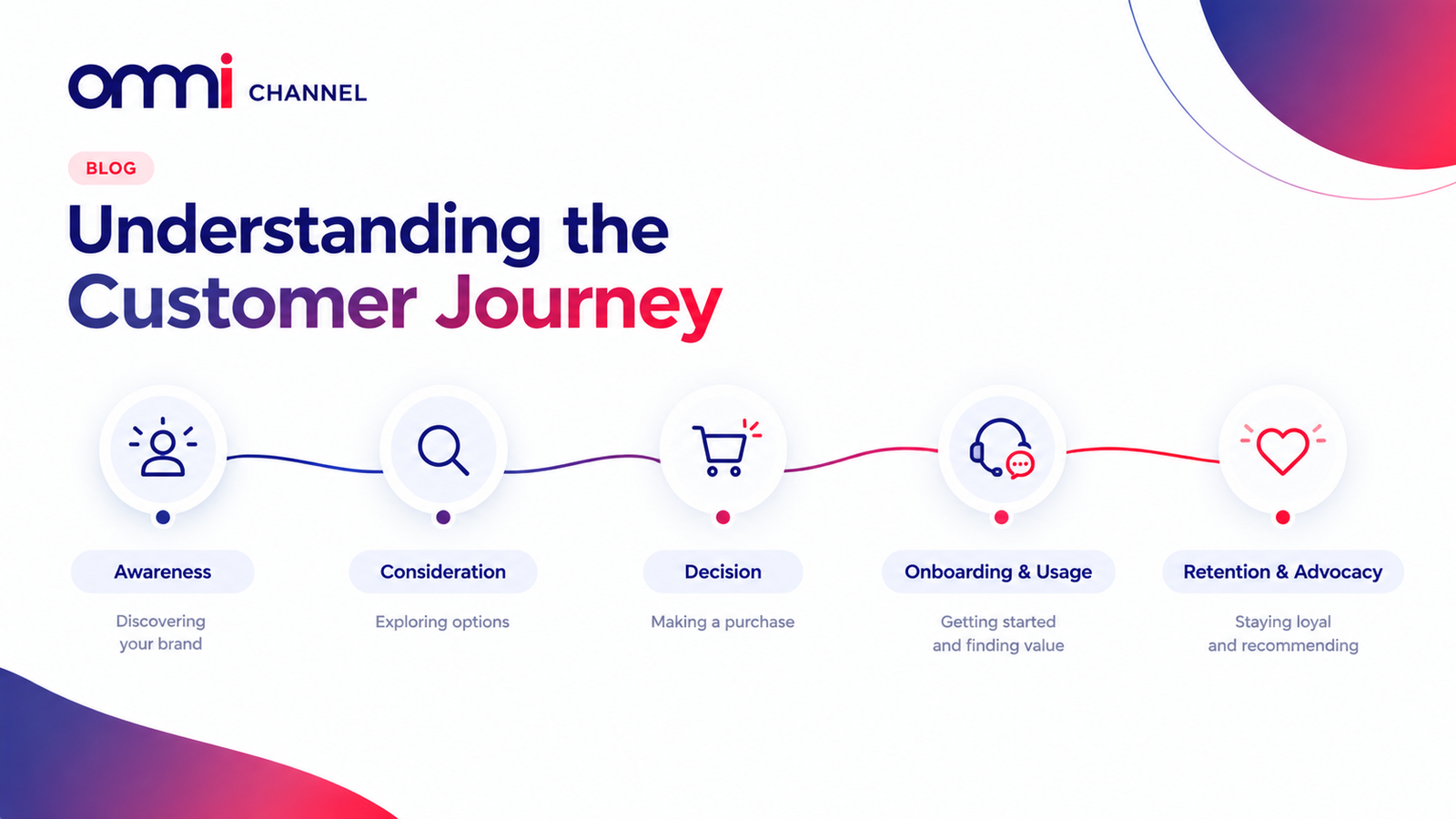
A common framework, however, moves from awareness and consideration to decision, onboarding or usage, retention and advocacy. Salesforce’s customer journey framework similarly describes a lifecycle that extends beyond the initial purchase into onboarding and continued customer engagement.
- Awareness
The customer becomes aware of a problem, need, product or business.
They may discover your company through Google, social media, advertising, word of mouth, content or a recommendation.
At this point, the customer is essentially asking: “Can this business help me?”
Your website, content, advertising and first interaction all contribute to the answer.
- Consideration
The customer begins evaluating possible solutions. They may compare providers, read reviews, visit websites, request information, speak to sales or contact customer service.
This is where communication gaps can become costly.
A prospect might submit a form, send a WhatsApp message and later call the business. If the team cannot see the previous interaction, the prospect may have to explain the same problem repeatedly.
The issue is not necessarily the individual channels. The issue is the lack of continuity between them.
- Decision
The customer decides whether to purchase, subscribe, sign a contract or take another meaningful action.
At this stage, pricing, payment, contracts, communication and the ease of completing the next step can all influence the journey.
A complicated process can create friction at exactly the point where customer intent is highest.
- Onboarding and Usage
The purchase is not the end of the journey. The customer now needs to start using the product or service and achieve the outcome they expected.
This is where the difference between making a sale and delivering value becomes clear.
Customers may need onboarding information, delivery updates, training, account support or help resolving an early problem.
- Retention and Advocacy
If the experience continues to meet expectations, customers may remain with the business, buy again or recommend it.
Advocacy is therefore not simply a marketing outcome. It is influenced by the experience accumulated across the journey.
The journey continues after the transaction.
What Are Customer Journey Touchpoints?
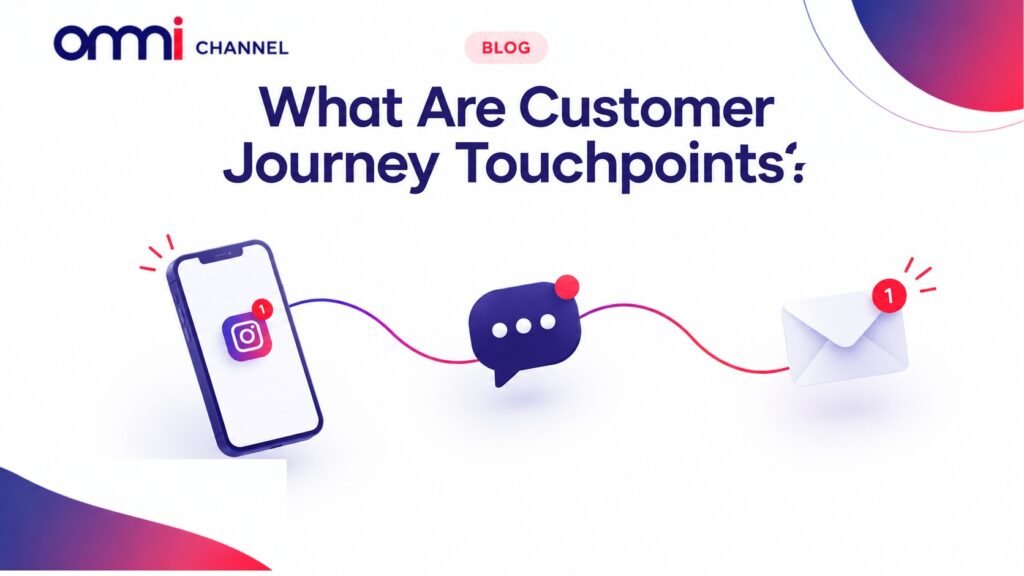
A customer journey touchpoint is a specific interaction between a customer and a business.
It could be a Google search, social media post, website visit, phone call, WhatsApp conversation, sales meeting, payment, delivery notification, email, support ticket or follow-up.
But a touchpoint is not the journey itself.
Imagine a customer who discovers a company through Google, visits its website, sends a WhatsApp message, speaks with sales, makes a payment and later contacts customer service about a problem.
Those are separate touchpoints. The journey is the connection between them.
This is why McKinsey’s research on moving from touchpoints to customer journeys recommends looking at the complete customer journey rather than optimizing isolated interactions.
This also explains why having more communication channels does not automatically create a better customer experience.
If a customer can reach you through phone, email, WhatsApp and social media but receives a completely different experience on each channel, the business has added channels without necessarily improving the journey.
Where Customer Service Fits Into the Customer Journey
Customer service is not a separate activity that begins after the customer buys. It can appear throughout the journey.
A customer may need help deciding which product to choose. A prospect may have a question before completing a purchase. A new customer may need onboarding support. An existing customer may need help resolving a problem.
Every one of those interactions can influence what happens next.
That is why Outsource Nigeria’s Customer Experience Solutions focus on customer interactions across channels including phone, email, live chat and social media.
The connection to the customer journey is important: customer service teams are often operating at some of the points where customers experience the most friction.
A delayed response, unresolved complaint or repeated request for information is not simply a customer-service issue.
It can affect the customer’s entire perception of the business.
Why Customer Journeys Often Break Down
Most journey problems are not caused by one terrible interaction. They often appear at the handoffs between teams, channels and systems.
Marketing passes a lead to sales. Sales passes a customer to onboarding. Onboarding passes an issue to support. Support needs information from another department.
Meanwhile, the customer moves between WhatsApp, email, phone calls and other channels. This is where fragmented data becomes a customer-experience problem and operational visibility becomes important.
IBM’s guide to customer journey mapping notes that customer interactions can span departments such as marketing, sales, product and support, and that journey maps can help organizations identify pain points and improve the processes behind them.
Outsource Nigeria’s guide to improving customer experience in contact centres discusses issues such as personalization, CRM integration and omnichannel interaction as part of improving customer experience in business and contact-centre environments.
The practical lesson is not that every business needs more technology.
It is that businesses need to understand where information, responsibility and communication are being lost.
Sometimes the answer is better training. Sometimes it is a clearer process. Sometimes it is better channel coordination. Sometimes it is technology.
And sometimes it is a combination of all four.
What Is Customer Journey Mapping?
Customer journey mapping is the process of visually representing what a customer does, thinks and experiences while moving through a particular journey.
A useful customer journey map does more than list company touchpoints.
It examines the customer’s goals, actions, expectations, emotions, pain points and the opportunities for improvement.
Nielsen Norman Group’s customer journey mapping guide explains journey mapping as a way to understand the customer’s experience across different stages, including what the customer is doing, thinking and feeling and where opportunities for improvement exist.
They also emphasizes that mapping can create a shared understanding across teams that otherwise see only their individual part of the experience.
That last point is particularly important for businesses. A sales team may think the customer journey is working because leads are being converted.
Customer service may think it is working because tickets are being resolved. Finance may think it is working because payments are being processed. The customer may experience all three departments as one continuous journey.
The purpose is not to create a beautiful diagram.
The purpose is to answer: Where is the customer struggling, and why?
How to Create a Useful Customer Journey Map
Do not begin by opening a design tool and drawing boxes.
Begin with a real customer scenario.
Choose one specific journey: for example, a new customer making a purchase, a prospect moving from enquiry to sales conversation, or an existing customer trying to resolve a support issue.
Then build the journey from evidence rather than assumptions. Customer interviews, surveys, website analytics, call records, support conversations and sales data can reveal what actually happens.
Nielsen Norman Group’s research guidance for journey mapping emphasizes the importance of grounding journey maps in research rather than treating assumptions about customers as fact.
Finally, connect the customer-facing experience to what is happening internally.
- Who owns the interaction?
- Which system contains the information?
- Where does the customer have to repeat themselves?
- Where does a request wait?
- Where does one team lose visibility of what another team has already done?
This is where journey mapping becomes an operational tool rather than simply a visual exercise.
What Should a Customer Journey Map Include?
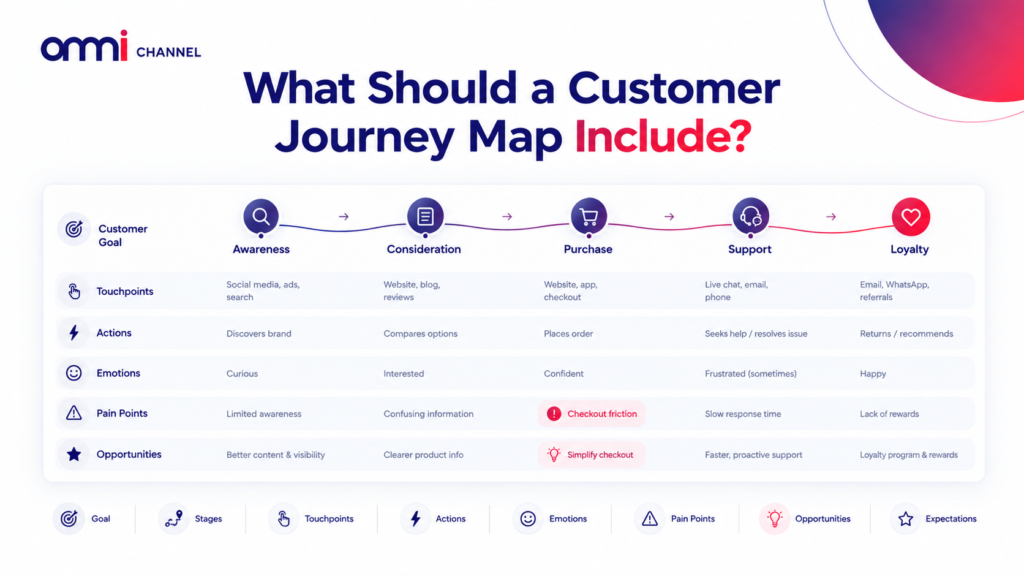
A practical journey map should connect the customer’s experience with the processes supporting it.
It should capture the customer’s goal, stage, actions, touchpoints, expectations, emotions, pain points and opportunities, while also making it possible to understand the teams and systems involved.
Nielsen Norman Group’s journey-mapping methodology similarly emphasizes the importance of the customer, scenario, expectations, journey phases, actions, emotions and opportunities.
For a business, however, there is another layer worth considering:
What is happening behind the touchpoint?
A customer waiting three days for an answer may appear to have a customer-service problem. The actual cause could be an unclear escalation process.
A customer repeating their information may appear to have an agent problem. The actual cause could be fragmented customer records.
A complaint that keeps moving between departments may appear to be a communication problem. The actual cause could be unclear ownership.
Journey mapping helps connect the visible customer problem to the operational problem underneath it.
How Technology Can Support the Customer Journey
Technology is most useful when it removes a specific source of friction.
A CRM can help centralize customer information. A ticketing system can give customer issues a defined workflow.
An omnichannel platform can help teams maintain context when a customer moves between communication channels.
A contact-centre system can help businesses manage customer interactions across phone and other channels.
But none of these automatically creates a better customer journey.
If the process is unclear, ownership is missing or customer data is unreliable, adding another platform may simply add another layer of complexity.
The better question is:
What information does the team need at this point in the customer’s journey, and what prevents them from having it?
That question leads to a much better technology decision.
Where CRM Fits Into the Customer Journey
CRM becomes particularly relevant when customer information is spread across different parts of the business.
A customer may have a sales history, email conversation, phone interaction, support request and payment record. If those pieces of information sit in different places, employees may have only part of the customer’s story when they need to act.
Outsource Nigeria’s Customer Relationship Management and Ticketing Software explains how CRM can be used to manage sales and customer processes, while integrated ticketing provides a central hub for customer questions, requests and concerns.
This is one of the clearest connections between CRM and the customer journey.
The goal is not simply to store more customer data.
It is to make relevant information available when people need it so the next interaction does not feel disconnected from the previous one.
That is also where Omni CRM becomes relevant: the platform brings customer information across sales, projects, support tickets, payments, communications and activities into a unified customer record.
Its omnichannel engagement capabilities are designed around the same continuity problem: connecting conversations, support requests, sales activities, customer communications and other information into a connected workspace so teams can maintain context throughout the customer relationship.
Omnichannel Customer Experience: More Channels, or Better Continuity?
Omnichannel customer experience is sometimes reduced to having multiple communication channels.
But the more important question is what happens when the customer moves between those channels.
A customer might begin with WhatsApp, continue by phone and later send an email.
If every interaction starts from zero, the business may technically have multiple channels but the customer still experiences a fragmented journey.
This is why Outsource Nigeria’s “Every Channel. Every Customer. One Solution.” article is a useful internal resource for readers exploring the relationship between multiple channels and customer experience.
The objective of omnichannel engagement should therefore not simply be:
“How many channels do we offer?”
It should be:
“Can the customer move between the channels we offer without losing context?”
That is a much more meaningful customer-experience question.
Listening to Customers Is Part of Journey Improvement
A journey map tells you what you believe is happening.
Customer feedback helps you understand what customers actually experience.
That is why Voice of the Customer programmes can complement journey mapping. Feedback from customers can reveal pain points that internal teams may not see because they are too close to their individual part of the process.
Outsource Nigeria’s existing article on Listening to the Voice of the Customer: Building Effective VoC Programs provides a useful internal resource for this part of the discussion.
The important connection is simple:
Journey mapping shows the path. Customer feedback helps explain the experience of taking that path.
Together, they can provide a clearer picture of where improvement is needed.
How to Improve the Customer Journey
Improving the customer journey starts by identifying where customers experience unnecessary effort.
Look for repeated questions, abandoned processes, long waits, channel switching, repeated requests for information and unresolved issues.
Then trace those problems back to their operational causes.
For example, if customers repeatedly contact support about the same billing issue, the answer may not simply be “train customer service agents better.”
The underlying problem could be unclear billing information, a confusing process or poor communication earlier in the journey.
Likewise, if customers repeatedly ask for updates, the problem may be a lack of visibility rather than a lack of willingness from customer service staff.
This is why journey improvement should focus on root causes rather than simply treating individual symptoms.
When Customer Support Becomes Part of the Solution
Some businesses eventually reach a point where customer support demand becomes difficult to manage internally.
More customers mean more calls, messages, emails and support requests. The organization then has to consider whether its existing people, processes and systems can continue to deliver the expected experience.
This is where outsourcing can become relevant — not simply as a way to move work outside the organization, but as an operating decision.
Outsource Nigeria’s customer support outsourcing article explores why customer support is among the functions businesses may outsource, while Outsource Nigeria’s Call Center Solutions explains how outsourced customer-service teams can be recruited, trained and managed around a company’s processes and requirements.
The important distinction is that outsourcing should support the customer journey rather than simply remove work from an internal team.
The business still needs to define the experience it wants customers to receive, the processes agents must follow, the information they need and how performance will be monitored.
The Bottom Line
A customer journey is not simply a marketing funnel. It is the experience a customer has as they move through your business.
That means improving it requires more than optimizing advertisements, training customer-service representatives or adding another communication channel.
Businesses need to understand the journey from the customer’s perspective, identify where friction occurs, trace those problems back to the processes and systems behind them, and then make targeted improvements.
A useful starting point is:
Map the journey. Listen to customers. Find the friction. Understand the cause. Fix the process. Then use technology or additional support where it genuinely helps.
The objective is not to make every touchpoint look impressive. It is to make the entire journey easier for the customer.
If your customers are moving between sales, phone, WhatsApp, email and support, but your teams do not have the same context, the problem may be bigger than an individual customer-service interaction.
Explore Outsource Nigeria’s Customer Experience Solutions or learn more about CRM and ticketing to see how people, processes and technology can work together to create a more connected customer experience.